REFRIGERA®: A CONTINUOUS CHALLENGE
Refrigera Industriale is a manufacturing company based in Pordenone, Italy, operating in the fields of refrigeration and air conditioning.
Roberto Sabatino:
“Careful design and testing measured over hundreds of thousands of cycles have enabled Refrigera® valves to achieve outstanding results in terms of energy efficiency and reliability.”
The company designs, manufactures, and distributes valves and components under the Refrigera® brand, intended for use in refrigeration and air conditioning systems operating with natural refrigerants and synthetic gases with very low environmental impact. Valves are therefore the company’s core product—components that “in many ways could be considered a commodity,” says Roberto Sabatino, Director of Refrigera Industriale, “but Refrigera valves are unique.”
THE VALUE OF RELIABILITY
To achieve a goal, you must first understand it. At Refrigera Industriale, the goal is to design high-performance valves capable of maintaining their technical specifications over time. Achieving this objective is the result of a complex team effort that highlights both the engineering expertise of designers and the technological innovation of production departments.
Each valve produced by Refrigera Industriale is made from innovative materials selected based on their technical performance and is subject to strict quality controls throughout the entire manufacturing process.
“We have established collaborations with leading polymer manufacturers and, together with them, we have studied and selected the most suitable materials. Each valve, depending on the refrigerant it is designed for, is built using the best available polymers—those capable of ensuring perfect chemical compatibility with refrigerant gases and extended service life. In addition, we have focused on careful design and testing measured over hundreds of thousands of cycles, factors that have allowed Refrigera® valves to achieve significant results in terms of energy efficiency and reliability.”
INNOVATING TO KEEP UP WITH CHANGE
“Personally, I believe that the F-Gas Regulation marked a turning point in the refrigeration and air conditioning sector in Europe. This turning point coincided with 2015, the year the regulation was first applied. For the first time, there was clear visibility on the gradual phase-out of high-GWP refrigerants. This framework influenced the decision-making processes of both end users and system manufacturers.
Considering that the lifecycle of a system exceeds 10 years, the phase-out of certain refrigerants significantly impacts their future availability and, consequently, operating costs. Therefore, when designing a system, attention is given to the refrigerants that will remain available throughout its lifecycle.
As a result, market demand has undergone a profound transformation, increasingly shifting toward natural refrigeration—primarily CO₂—alongside a growing use of low-GWP synthetic refrigerants and a strong focus on high energy efficiency systems. In response to this evolution, Refrigera Industriale has engaged in continuous and intensive product innovation, developing a complete range of steel valves for transcritical CO₂ applications, characterized by high energy efficiency, high Kv values (flow coefficient), and low torque requirements in ball valves.”
THE ADDED VALUE OF REFRIGERA INDUSTRIALE VALVES
- Available for all refrigerants and all applications
- 100% made in Italy
- Perfect compatibility between material and function
- Optimized design based on flow dynamics
In 2020, Refrigera Industriale inaugurated its new production facility in Pordenone, a site that represents a concrete step toward Industry 4.0 standards.
NATURAL REFRIGERANTS: A STRATEGIC CHOICE
“The objectives of our R&D investment plan and the composition of our sales clearly reflect Refrigera Industriale’s vision regarding the long-term environmental sustainability of refrigerants. When we realized that GWP alone did not accurately represent long-term sustainability, we focused our resources on natural refrigeration.
This belief was further reinforced when five countries—The Netherlands, Germany, Norway, Sweden, and Denmark—submitted a joint proposal to the European Chemicals Agency (ECHA) to restrict the use of 4,700 chemical substances (PFAS), including some HFC and HFO refrigerants, known for their persistence in the environment and their impact on water and soil.
Today, Refrigera Industriale produces valves for all natural refrigerants, including ammonia, hydrocarbons, and CO₂ systems. Investing in natural refrigeration has also been a strategic decision, as natural refrigerants can cover all applications currently served by HFCs—and even beyond—since no synthetic refrigerant can match the wide temperature range achievable with natural solutions.”
REFRIGERA 4.0
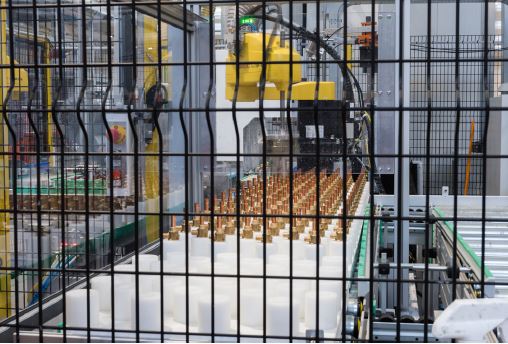
In 2020, Refrigera Industriale launched its new 5,000 m² production facility in Pordenone. The new plant represents a transition toward Industry 4.0 standards, featuring automated and robotic production systems, advanced technologies, and interconnected processes that enable real-time monitoring and improved working conditions.
The facility includes a dedicated laboratory for product development and testing, as well as an advanced Quality Control system equipped with state-of-the-art instrumentation.
RAW MATERIALS AND COMPONENTS: A WEAKNESS OF EUROPEAN INDUSTRY
Starting from the second half of 2020, significant and continuous increases in raw material prices have been recorded. Brass prices, for example, increased by over 60%, sometimes influenced by speculative behaviors due to limited material availability.
Like many manufacturers, the company was forced to revise procurement strategies and planning parameters. Despite maintaining production continuity, cost increases reached double-digit levels.
“Raw materials and components represent a structural weakness for European industry. The European Union must change its approach and support strategic sectors. It is not sustainable for many industries to rely heavily on imports from Asia, as is currently the case with semiconductors and batteries.
Europe cannot face the energy transition while depending on imports from China and Southeast Asia for more than half of its material needs. Investments in Europe and partnerships with Indo-Pacific countries are essential to build a future of prosperity and security, in competition with state-driven investment strategies.”
ACTION AGAINST CLIMATE CHANGE
Acting against climate change is not only the responsibility of policymakers—everyone is called to contribute.
On August 9, 2021, the Intergovernmental Panel on Climate Change (IPCC) warned that global warming is already causing widespread damage to ecosystems and increasing the frequency and intensity of extreme weather events. The report highlights that further temperature increases are inevitable due to delayed effects of human activity.
The most critical finding: global warming is progressing rapidly, with average temperatures between 2011 and 2020 already 1.09°C higher than in the pre-industrial period (1850–1900). The risk is exceeding the 1.5°C threshold in the coming decades, leading to potentially catastrophic consequences.
KEY CONCLUSIONS OF THE IPCC
- CO₂ is the primary driver of climate change, with other greenhouse gases also contributing
- Most global warming is caused by human activity
- Strong and sustained emission reductions are still possible and necessary
POSSIBLE SCENARIOS
Experts outline two main scenarios:
- Low CO₂ emissions
Immediate, rapid, and large-scale reductions in greenhouse gas emissions, reaching net-zero by 2050. In this scenario, global warming is likely to remain below 2°C. - High CO₂ emissions
Failure to reduce emissions would result in exceeding both 1.5°C and 2°C thresholds by the end of the century. In this case, oceans and ecosystems would become less effective in absorbing CO₂.
A coordinated and immediate global effort is essential to preserve the Earth’s natural capital, recognizing that climate change has a significant impact on both social and economic systems, at local and global levels.
